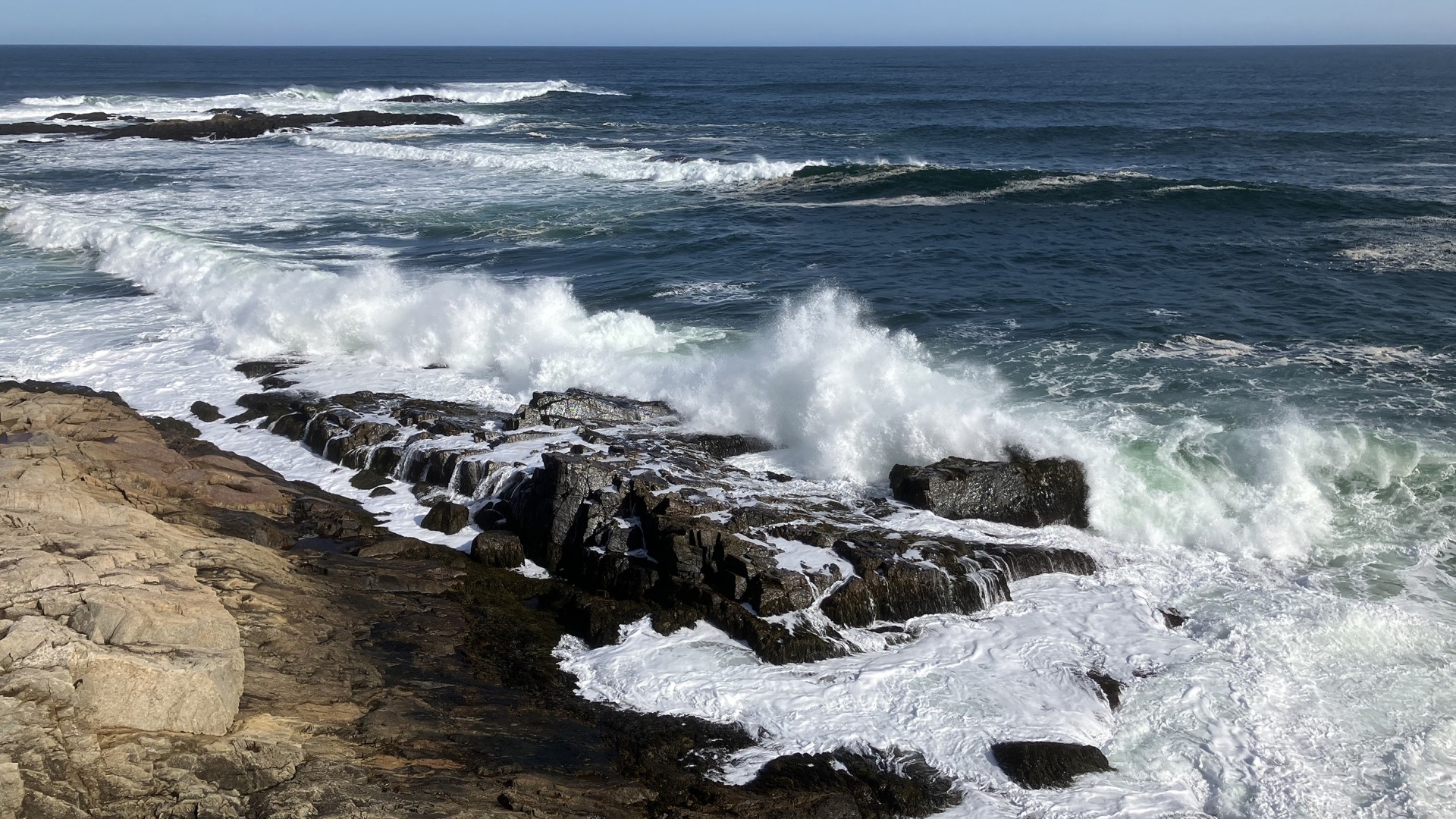
StFX biology professor Dr. Ricardo Scrosati has edited a new Elsevier book that brings together 40 researchers from 12 countries to take stock of rocky shore ecology worldwide.
Ecology of Marine Rocky Shores, published this fall as volume 105 of the book series Advances in Marine Biology, spans 10 chapters. Elsevier invited Dr. Scrosati to serve as editor last year, giving him full freedom to shape the book’s contents. He selected experts on different aspects of rocky shore ecology and reviewed each of their chapters.
“My main goal was to produce a platform where the most influential theories on how coastal ecosystems work could be available,” Dr. Scrosati says. “To achieve balance, I invited old and new generations of researchers to represent the various theories at play, both proven and under current development. This wide coverage is particularly important for young students and researchers, who may be unaware of older, yet critical, knowledge on rocky shore ecology that modern fast-paced journals may often ignore.”
As a result of this approach, the chapters of this book cover a large diversity of organisms, from microbes to invertebrates to giant kelp algae, he says. Likewise, these chapters discuss patterns and processes across a wide range of ecological scales, from local populations to entire communities to large metaecosystems.
“The invitation to serve as this book’s editor was a great honour because it trusted my decades-long international experience to recruit leading marine scientists from all over the world. The book's main theme, rocky shore ecology, is broad, so I tried to recruit experts covering as many aspects of this discipline as possible,” says Dr. Scrosati.
Some topics included in the book are:
• metaecosystems and regional dynamics
• climate change and ecological variation
• intertidal community responses to environmental stress
• role of kelp forests in coastal biodiversity and productivity
• rafting dispersal connecting rocky shore communities
• microbial ecology of marine rocky habitats
• conservation and restoration planning in the age of large datasets
“Overall, I think that the chapters of this book succeed in providing a balanced view on where we are today and, importantly, identify key questions to keep advancing our knowledge. I am deeply grateful to all contributors for sharing many years of expertise through their chapters.”
The electronic version of the book is available HERE.