Campus to Community: Sharing stories from our ongoing connections
St. Francis Xavier University doesn't stop at the edge of campus. Campus to Community is an ongoing series highlighting the deep ties between StFX and the communities it serves. We’re shining a light on these relationships--from research labs and global outreach, to service and shared purpose--and how they help shape and strengthen both. To see the full series, please see HERE.
From the classroom to the Amazon: how a StFX internship is redefining business education while helping Peruvian farmers secure a better livelihood
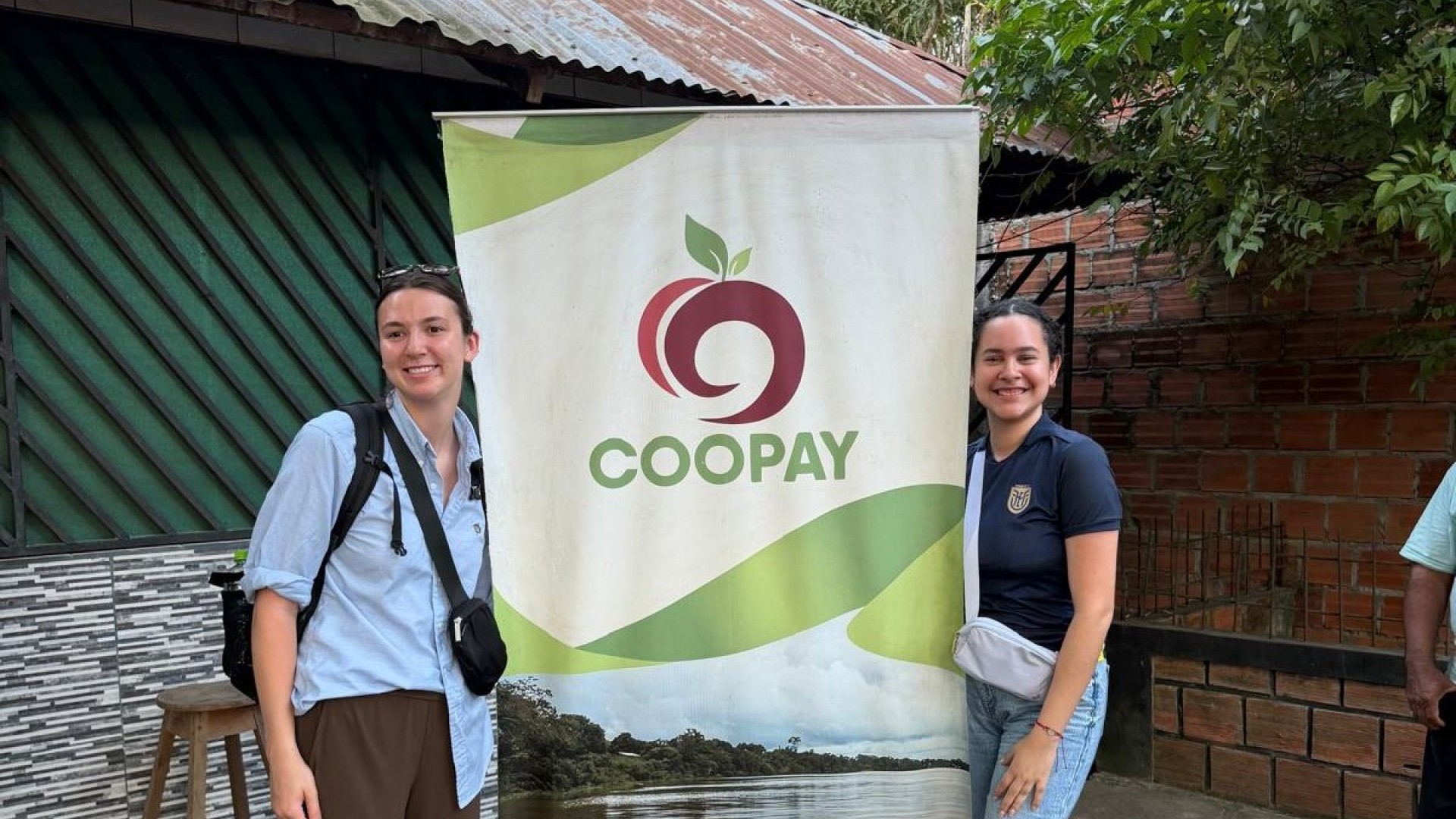
For StFX Schwartz School of Business professor Dr. Brad Long, a modern business degree is a tool for something much bigger than profit. It's also a shifting of focus toward social responsibility. This summer, two StFX students found out exactly what that means, in part through spending three weeks deep in the Peruvian Amazon.
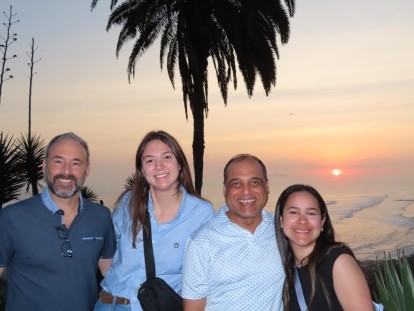
Dr. Long, with colleague Yogesh Ghore, senior program staff at the Coady Institute, brought Schwartz students Katie Wilson and Domenica Huila to the Amazon region of Peru in late May and June through the Sears Internship in Social Enterprise.
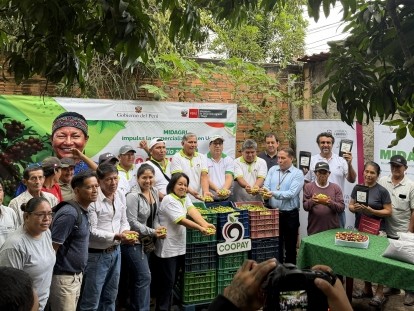
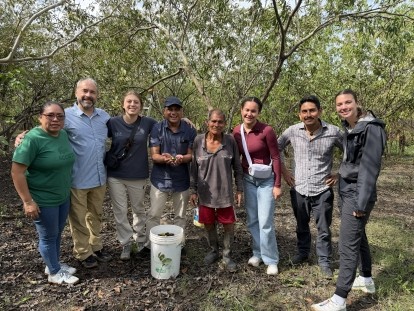
Dr. Long and Mr. Ghore joined the students for the first week of fieldwork as they worked alongside the Cooperativa Agraria Yarinacocha, or COOPAY, a co-operative of farmers who grow camu camu, a small, tart fruit prized for its vitamin C concentration. The co-op, a partner organization of a longtime Coady partner, has pooled produce and knowledge to create more markets for the berry so the farmers can earn better livelihoods.
“Our work is to try to help identify opportunities for them to become more financially secure and to have better governance processes. We did a lot of the analysis to help this organization become more secure and stable,” says Dr. Long, who has taken previous intern students for field research in India and Ghana on behalf of grassroots organizations there.
The internships are funded through the Sears Chair in Corporate Social Responsibility, which Dr. Long holds. The chair was established by John and Adrienne Peacock, donors and alumni who wanted to give students an immersive, in-depth experience connecting business education with social responsibility.
One of its mandates is to connect Schwartz students with the Coady so that the students can learn more about the institute’s development methods and to see how their skills can be leveraged in non-corporate contexts, to make positive environmental and social impacts.
“It’s more about trying to see their business education as an opportunity to doing good,” Dr. Long says.
SEEING IT IN THE WORLD
“From start to finish, it was remarkable,” says Katie Wilson, on the internship which combined three weeks of field work with a summer of analysis.
Ms. Wilson, a 2026 honours accounting graduate from Toronto, ON who started studies at Dalhousie Law School in September, says she had always been interested in travel and how the world, and different businesses, work. She had traveled with Global Brigades Canada to Greece, an experience that further lit her passion. Her honours thesis had shown her that she liked research. And two terms with the Students' Union, one as VP Finance and Operations, one as Chair of the Board of Directors, had given her knowledge of governance.
In Peru, it all came together. The internship team built its deliverables around each student’s strengths and interests, and for Ms. Wilson, that meant leading a governance review of the co-operative.
She describes the internship experience as immersing her in a place and a culture she never would have encountered on her own and being struck by how welcoming and generous people were.
“In class you learn about co-ops, being able to see it in the world was a different thing all together,” she says. Seeing why these things happen, why co-operatives work, all things they knew on paper but came alive in the field, was an incredible experience, she says.
“It was amazing,” agrees Ms. Huila, a third year honours finance student from Ecuador. “The experience gives you one part of the Amazon, the tourist experience, and it gives you another perspective, the families struggling with income conditions. It was a good contrast. It showed why you are here and how you can help, and the cycle of help can be good for all.”
Ms. Huila says contributing to her community is something she wants to do no matter where her future career takes her. “I want to have this balance. The numbers are important, but the people behind the numbers are more important,” she says.
In Peru, the experience wasn’t just focused on returns and money. The return was also to make this community a little bit better, in terms of livelihood. “That felt so good.”
She says being part of creating opportunities to help others build more capacity was a tremendous experience.
BEYOND THE CLASSROOM
For both the students and Dr. Long, the value of the internship goes beyond the experience itself. It's about what happens when students take their skills outside the classroom and put them to work on behalf of people they've come to know.
Ms. Wilson says the experience, combined with her time in student government, shifted her life’s goals.
These opportunities? Paramount, she says.
It's a sentiment Dr. Long shares. These experiences give students an opportunity to see the tangible impact their work can have on someone else’s livelihood, which can open their eyes, not just to a different kind of career, but to a different definition of what a business education is for.