

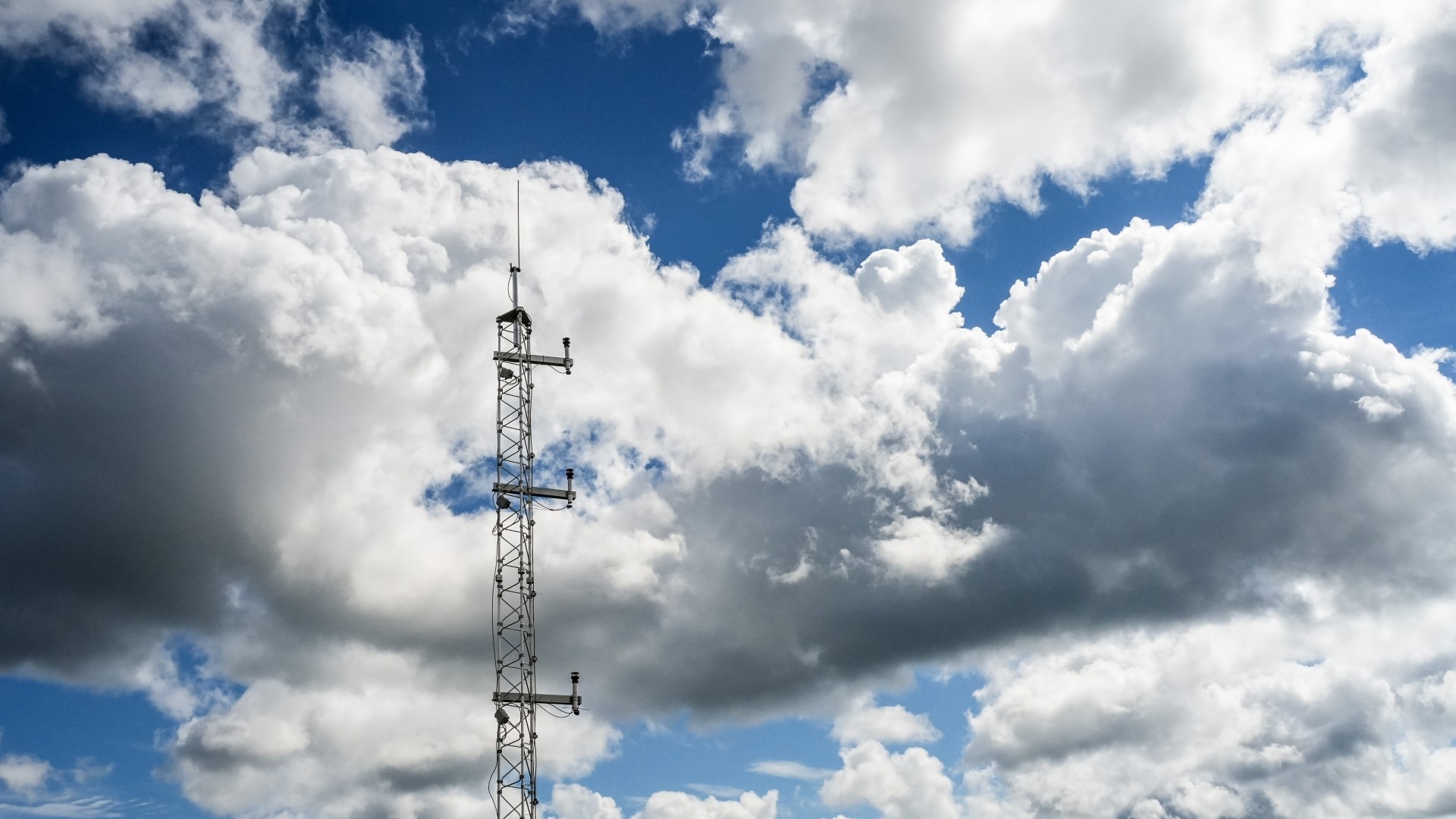
StFX’s new methane research facility is situated on a flat area near Oxford, NS, where little is visible. Most of the equipment that makes the site remarkable sits out of sight, buried or enclosed. And that is the point: this is one of the more unusual research facilities in the country, a place built to release methane on purpose, so scientists can learn to find it, says Dr. Nadia Tarakki, Acting Research Coordinator at StFX’s FluxLab.
The facility is called SIMFLEX-BASE, short for Simulation Facility for Large-Scale Emission Experiments. Developed and led by FluxLab, the StFX research group headed by Dr. Dave Risk, it is designed to solve a deceptively hard problem. Methane is invisible, odourless in the quantities that matter, and notoriously difficult to measure accurately once it drifts from its source, Dr. Tarakki says.
“That difficulty has real consequences as methane is a potent greenhouse gas, and landfills are among its largest sources. Regulators and industry increasingly rely on satellites, aircraft, drones and ground sensors to detect leaks, but those tools are only as good as our ability to test them. That is where SIMFLEX-BASE comes in.”
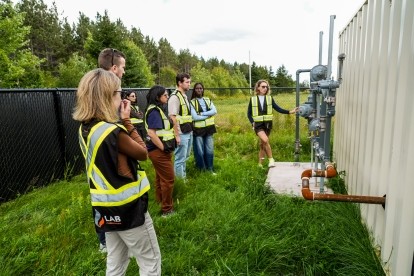
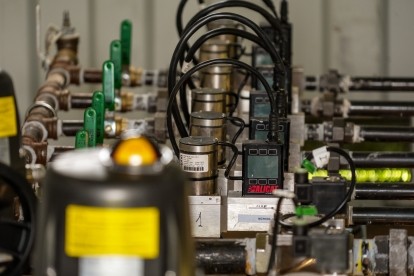
The site uses controlled, carefully metered releases of methane from installed points across the field. Every release is intentional, measured and supervised, logged down to the second, so researchers know exactly how much gas was emitted and where, she notes.
Measurement teams then attempt to detect and quantify those releases without knowing the answer in advance. Their results are compared against the truth, and the findings help regulators and industry decide which technologies are ready for real-world use.
FluxLab has designed and executed this kind of work before. Since 2023, the group has operated a similar facility in Petrolia, ON, that has become internationally significant for testing methane technologies, drawing measurement teams from around the world. SIMFLEX-BASE builds on that experience.
“Set on simpler, open rural terrain and connected directly to a natural gas pipeline, the Oxford site is easier and less expensive to operate, which means testing can happen more often and year-round.”
She says the teams coming to SIMFLEX-BASE will largely be companies developing the next generation of methane measurement technologies. At the Petrolia facility, about 40 teams from nine countries have paid their way to take part, most from the private sector.
“For serious technology developers, independent testing has become an important step in showing that their systems work. Very few places can provide that kind of testing, and it takes a dedicated team of engineers to build and run the release systems, a logistics team to coordinate international visitors and field campaigns, and an independent research group to make sure the results are trusted. That combination is what will make SIMFLEX-BASE a global centre for methane technology development.”
The facility may also become an important testing ground for the growing fleet of methane-observing satellites, especially because Nova Scotia's vegetation and terrain are more like many populated parts of the world than the desert sites traditionally used for satellite testing.
For StFX, the facility extends the university's reach well beyond campus. “It positions a small Nova Scotia university at the centre of a global effort to curb methane emissions, working alongside space agencies, technology developers and environmental researchers internationally. The work also connects directly to communities: better methane detection means faster leak repairs, reduced climate impact, and fewer odour problems for people living near waste facilities,” Dr. Risk says.
It is also a training ground. Students across earth and environmental sciences and beyond gain hands-on experience with field measurement, atmospheric science, and the practical business of running experiments that matter to real regulatory decisions. Few undergraduate or graduate students anywhere get to work at a facility of this kind.
“The goal is straightforward,” says Dr. Risk. “If we can improve the tools used to detect and measure methane, we can help industry and regulators actually reduce it. That is the whole point.”
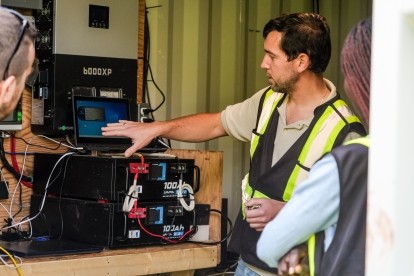
The emissions aspect of the work has been reviewed and cleared by the Nova Scotia Department of Environment and Climate Change, and the release system is being installed and commissioned before any testing begins. Releases will happen only during planned campaigns, with StFX staff on site.
“For a university that has long emphasized the connection between research and community, SIMFLEX-BASE is a fitting addition: quiet, technical work on a rural field that reaches all the way to the atmosphere, and back down to the communities living beneath it,” Dr. Tarakki says.