

Research X’cellence: Our StFX community leveraging expertise on today’s most pressing challenges. At StFX, innovative research and creative activity are benefiting our communities, addressing some of today’s most pressing challenges. Research X’cellence shines a spotlight on members of our inspiring educational community and the impact they’re making. (To see the full series, please click HERE.)
Dr. Sebastian Harenberg’s research on sport selection and youth experience looking to improve the process for all
For many athletes, selection day is an emotionally charged experience. Making a team can feel like validation; being cut can feel devastating. Dr. Sebastian Harenberg, a StFX human kinetics faculty member, knows this reality well. He’s made it the focus of his latest research.
Dr. Harenberg’s research examines youth participation in sport and the processes used to select athletes for teams at both the youth and professional levels. While selection is a necessary part of competitive sport, Dr. Harenberg is less interested in why athletes are selected and more focused on how those decisions are communicated and experienced by everyone involved. He’s hoping his research will make the process easier for all.
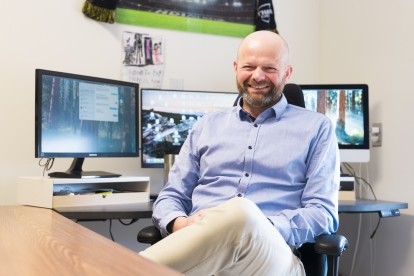
At the heart of his research is an interest with group dynamics and how people experience being part of a social entity like a sports team, and how those experiences can impact people.
Athletes are competing long before the competition itself begins, he explains. “They’re competing for roster spots and for playing time.
“It’s a trying time for everyone,” he says. “The children, the parents, the coaches, and the clubs.” Everyone feels the pressure.
Existing research shows that the selection experience can be a significant event for players and parents and that it can be a very important negative experience for some athletes.
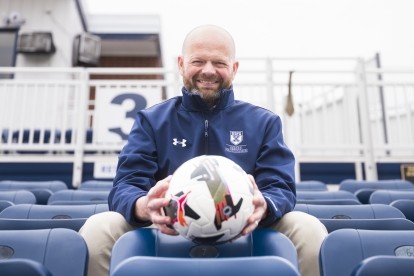
That concern matters both on the playing field—as well as off. “The dropout rate is really important to Canadian society,” Dr. Harenberg notes. “A moving society is a healthy society, and one that’s more connected.”
Dr. Harenberg is currently in the early stages of this research, working closely with community partners. He holds two grants in collaboration with Canada Soccer, with additional funding applications underway.
The project involves interviews with administrators, coaches, and parents to capture multiple perspectives on the selection process. The goal is to understand how selection decisions are communicated, how expectations are set, and how feedback is, or isn’t, provided.
He’s looking at questions such as what information is shared and how transparent the process is; are athletes receiving meaningful feedback on their performance; and how do organizations communicate with parents before, during, and after selections.
The findings will be shared with Canada Soccer’s Player Movement and Management Committee, ensuring the research helps inform decision-making at the organizational level.
“The intent,” he says, “is to help with the process.”
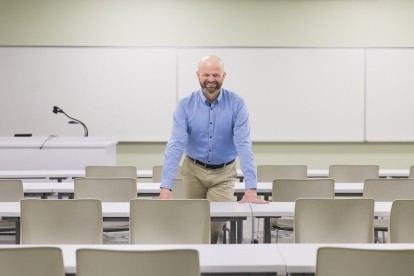
One emerging theme is the importance of communication. Administrators often believe that when expectations are clearly set and feedback is structured, the negative aspects of selection are less severe, even when the outcome is disappointing, he says.
Dr. Harenberg draws a comparison to education. In school, he says, students receive report cards. There’s communication about strengths, areas for improvement, and whether you advance. The same doesn’t often happen in sports, leaving athletes without feedback to understand their strengths and where they need to improve.
His research, he says, is not looking to get rid of selection, but rather how we can make the process more conducive to learning and growth.
“It’s not going to alleviate all the heartbreak, but some,” he says. “The goal is to make the selection experience more positive.”
Dr. Harenberg has coached at the U Sports and NCAA levels and has seen the selection process frequently. He’s selected. He’s also a mental performance consultant who works with athletic teams on campus. In this work, he has heard past and current stories of emotional impact of selected decisions.
The negative experience of seeing children suffer due to these decisions is a powerful motivator. “It’s a very stressful period on all involved. How can we make the process more transparent and easier on everyone.”
He’s also interested to learn about the impacts to those who are selected.
Since joining StFX in 2020, Dr. Harenberg has taught courses in sport and exercise psychology, group dynamics, coaching and leadership, and psychological skills training. He says he appreciates the university’s supportive research environment.
“What excites me is I believe the research can make an impact,” he says. It can help inform policy, and it can change processes.
He’s also energized to involve students in the work. Watching his PhD student grow through her involvement in this research “has been phenomenal.”
While the current focus is on soccer, Dr. Harenberg hopes the findings will eventually be shared across other sports, and within organizations, often run by volunteers to provide a framework to do these things better, not by criticizing, but by offering help.
“We can change the experience for many, many kids,” he says. “That’s pretty exciting.”