

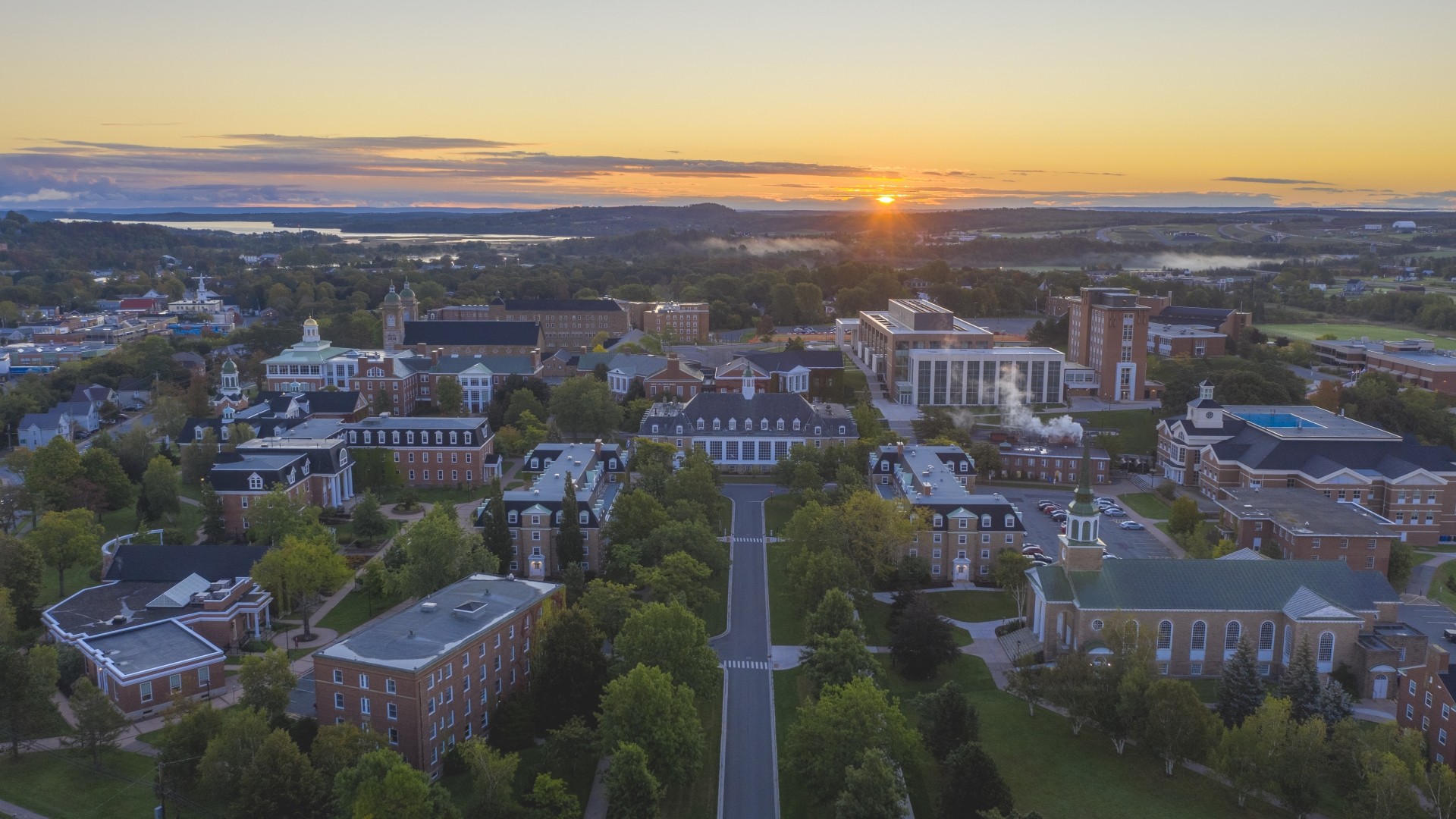
St. Francis Xavier University’s residence occupancy rate reached a strong 98 per cent this past fall, meeting its goal for the year.
According to StFX Vice-President Students Elizabeth Yeo, this year’s numbers reflect a mix of factors, including ongoing work to strengthen community and broader housing patterns in the region.
“The real story is about community,” says Ms. Yeo, noting StFX’s ongoing, intentional efforts to create an environment where students feel connected and valued.
This year, 1,750 students are living in 11 residences across campus, filling 1,796 available beds. Ms. Yeo attributes the occupancy to a blend of factors: shifts in the broader housing landscape, excellent work by the StFX Housing and Communications teams in marketing and administration, and campus-wide efforts to strengthen the student experience.
“We know that housing and enrollment patterns can shift from year to year,” says Ms. Yeo. “What’s most exciting for us is seeing the community culture we’ve been working to nurture really take root. Residence life at StFX has always been about more than where students live: it’s about how we live together. We’re seeing a growing sense of belonging, respect, and shared responsibility. Students are looking after themselves and each other and realizing that when they do, our whole community thrives.”
BELONGING AND RESPECT
The positive momentum in residence life is part of the university-wide Being Xaverian strategy, she says, which guides efforts to support a culture grounded in belonging, wellness, respect and engagement.
Residence programming, student training, and initiatives such as Flourishing Foundations and the Good Neighbours Program reinforce that respect for self and others is foundational to community.

Ms. Yeo notes that StFX has long been known for its strong sense of community and highly engaged student experience. The work underway in residence life builds on that tradition by ensuring that contemporary student needs — including safety, wellness, academic support, and student leadership — are fully integrated into residence operations and programs in ways that help today’s students thrive.
These efforts have helped strengthen coordination across services, creating a more integrated model of support that nurtures connection and care across the student experience.
A key ingredient has been proactive, individualized outreach, particularly during the transition to university life. Residence, Student Services and Academic Affairs teams now embed personalized supports into the model, reaching out early to help students navigate both personal and academic challenges. This is followed by dedicated on-campus programs such as the highly successful Orientation REACH Day and the X Act program (coordinated by the Academic Success team).
“When students feel seen and supported from the very beginning, they’re far more likely to flourish and contribute positively to their community.”
This focus on belonging and early support is also reflected in StFX’s recent results from the 2024 Canadian University Survey Consortium (CUSC). In the national benchmarked survey, StFX students reported very strong levels of satisfaction with the university’s welcome and orientation experience — underscoring the importance of connection, community, and early outreach in helping students feel at home on campus.
CHANGE ON THE GROUND
“We’ve seen early indicators that these cultural changes are taking hold — fewer conduct incidents and damages, stronger retention of student staff, and positive engagement among returning students, including growing participation in residence councils and community programs,” says Jacqueline DeLeebeeck, Director of Residence Life.
“But more importantly, the tone has changed. There’s greater pride, empathy, and ownership. Students want their residence to feel like their community, and they’re helping to make it that way.”
The relational and restorative model now in place focuses on dialogue, understanding, and repairing harm when conflicts arise, reinforcing accountability through empathy.

At the same time, residence councils are re-emerging as vibrant student-led bodies shaping programming and peer leadership. Enhanced training in inclusion and wellness, and an ethos of looking out for each other, is helping to sustain that sense of belonging across all residences.
“We’re trying to build the blocks for students to be successful,” says Ms. DeLeebeeck.
Ms. Yeo explains that the Residence Renewal Project began during the pandemic, when student safety and support were immediate priorities. “Now that those foundations are strengthened, our focus is evolving to strengthening vibrant, student-led communities through renewed residence councils and expanded social programming that make residence communities thrive.”
STRONG TEAM EFFORT
Bob Hale, AVP Ancillary Services, says reaching 98 per cent capacity is a strong result in an environment where housing dynamics and external pressures continue to evolve.
He noted that fluctuations in enrollment and recent federal changes to international student policies have made it tougher in an already competitive environment to meet housing targets.
Despite those challenges, Mr. Hale and University Housing Manager James Tobin both credited StFX’s progress to strong teamwork across departments. “It was a real group effort,” noted Mr. Tobin.
The residence portal for next year has already opened, he said, with more than 1,000 applications already received, reflecting early student interest.
Mr. Hale says the high occupancy is also due to staff who worked hard with students to give them what they’re looking for, including an increase in single rooms. Staff also enhanced their social media presence, offering virtual room and dining hall tours, and opened the application portal earlier to help students plan.
Mr. Hale says not only has StFX met its own high targets, but the university is pleased to exceed the 95 per cent target that the province looks for, which is related to its operating grant. Maintaining strong occupancy has many benefits. It helps maintain government funding, supports food services, and contributes to a vibrant campus atmosphere.
“It helps make the campus more alive, with people coming and going. It gives a different vibe,” says Mr. Hale.
Residence life is much more than beds and buildings. It provides students with an opportunity to get together for social and academic purposes and gives students a support system, he says.
Ms. Yeo notes that the evidence is also clear: students who live in residence tend to achieve higher academic success. National research and StFX’s own experience show that living in residence provides important advantages — from easier access to academic supports and study spaces, to stronger peer networks, to the sense of belonging that helps students stay motivated and engaged.
“Residence life supports academic achievement in very real ways,” says Ms. Yeo. “When students feel connected to their community, when they have people checking in on them, and when they’re just a short walk from professors, labs, tutoring, and study groups, they’re more likely to succeed academically. Residence helps make university feel manageable — and that foundation of belonging shows up in their course performance too.”
BRINGS COMMUNITY
Student Emma Nolan of Toronto, ON, a senior community advisor in MacIsaac Hall, has been a residence leader at StFX since her second year on campus. She graduated with a BASc in Health degree and is back at StFX completing the Accelerated Nursing degree.
“Residence is so appealing because of the community it brings,” she notes.
Ms. Nolan explains that living in residence offers students the chance to form lifelong friendships and is a steppingstone to building connections across campus, opening doors to opportunities and fostering a supportive environment where everyone can thrive.
Residence programs are particularly impactful for many students who arrive and don’t yet know anyone. “Everyone feels like they have people quickly.
“That really helps, and it leads into the educational aspect,” Ms. Nolan says. Students get to know many different people and learn about the supports within residence and the resources they need to succeed.
Connor Samson, a third year Schwartz School of Business student taking an advanced major in marketing and a minor in psychology, says he believes StFX residences are in such high demand because of the tight-knit communities they offer. “Being on-campus with classmates and new friends from around the world can make a big difference in transitioning to a new setting like university,” says Mr. Samson, a resident of Bishops Hall since he began his StFX journey in 2023. Now serving as the building’s Community Engagement Officer, he now runs those programs that keep students academically and socially confident. StFX is often praised for its family-like feeling, he says. “Staying in any of our residences is a great place to find that family.”
LOOKING AHEAD
Ms. Yeo emphasizes that these positive trends reflect both intentional work and broader circumstances, including local housing dynamics and regional enrollment shifts.
She notes that residence life continues to evolve as student needs and housing options change.
“When students feel that they belong, they take care of themselves and each other,” she says, “and that spirit extends beyond campus into the communities they’re part of. That’s what Being Xaverian is all about, and it’s what will carry us forward.”
“Our priority is to continue making residence a place where students feel they belong — and where they can lead, grow, and build community.”