

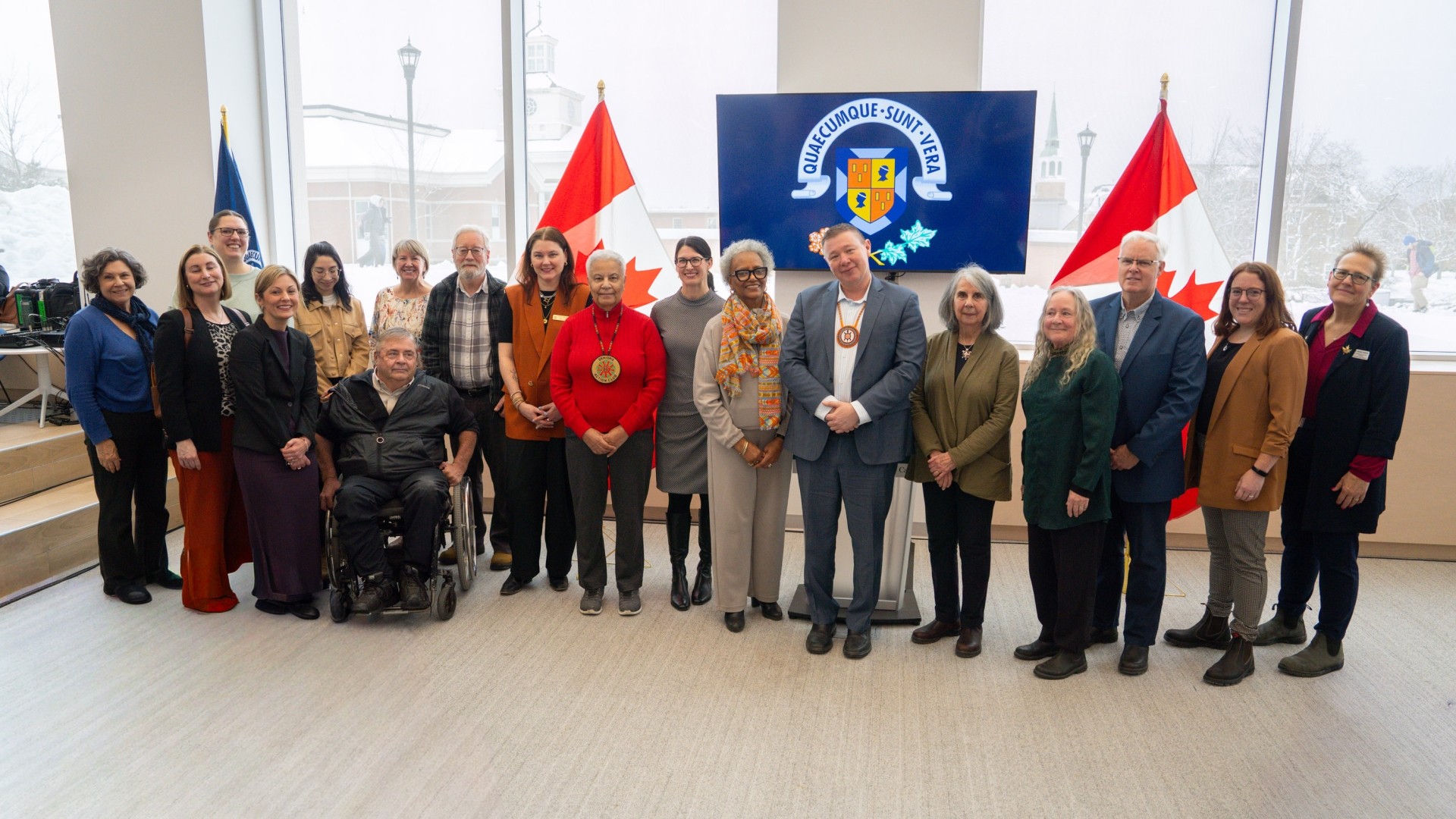
St. Francis Xavier University has received $3.5 million in Government of Canada funding to strengthen support for seniors in northeastern Nova Scotia, helping older adults, particularly those with disabilities, remain connected, active, and included in their communities.
Jaime Battiste, Parliamentary Secretary to the Minister of Crown-Indigenous Relations and Member of Parliament for Cape Breton–Canso–Antigonish, was at StFX Jan. 20th to announce the funding on behalf of Stephanie McLean, Secretary of State (Seniors). The funding comes through the New Horizons for Seniors Program (NHSP), which funds pan-Canadian and community-based initiatives across Canada that create a significant impact for the social inclusion of seniors in their communities.
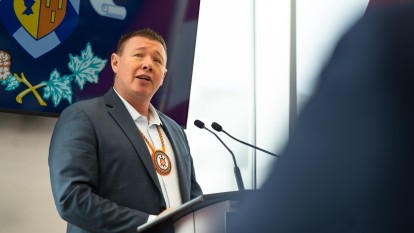
“This funding will assist vulnerable seniors with disabilities,” he said, “providing crucial programs and services customized to the specific needs of seniors living in northeastern Nova Scotia. The New Horizons for Seniors Program is most effective because it brings together organizations that have a deep understanding of the needs of seniors in the community to deliver supports that will increase social inclusion.”
Communities are stronger when every Canadian feels connected and included, Mr. Battiste said, as he noted that this is good news for not just seniors but for everyone in the region.
The project team includes co-directors StFX sociology professor and Canada Research Chair Health Equity and Social Justice Dr. Katie Aubrecht and BASc in Health professor Dr. Megan MacGillivray; community lead, Dr. Ann Bigelow, the president of Keep Well Antigonish Society and StFX psychology professor emeritus; and program manager Bethany Theuerkauf, along with the Age Friendly StFX Working Group and community partners.
StFX’s collective impact project will receive up to $3,452,962 over five years under the pan-Canadian stream of the 2023–24 NHSP.
StFX will work collaboratively with various organizations across northeastern Novia Scotia to increase the social inclusion of vulnerable seniors aged 55 and above with disabilities. The project will map and increase access to programs and services, encourage intergenerational connection and volunteer participation.
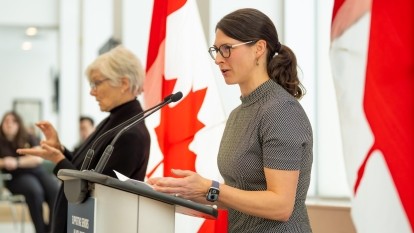
Speaking on behalf of StFX, Dr. Erin Morton, Associate Vice-President, Research, Graduate, and Professional Studies, said receiving $3.5 million in federal funding is extremely exciting. “This is a significant investment, and I am especially pleased to note that out of 20 projects that were successful, this project was approved for one of the highest total amounts awarded to any applicant across the country.”
This funding is a strong endorsement of the quality, relevance, and impact of the work being done at StFX, she said. “It reflects the trust that our federal partners place in our researchers and community collaborators to address real world challenges and opportunities related to aging.”
Dr. Morton noted the impact of this funding goes well beyond the individual projects. It will meaningfully enhance collaboration between the university and local community organizations, and it will create opportunities for researchers and students to engage in experiential learning, participatory, action-based research, and knowledge-sharing that flows in both directions.
Importantly, this investment also advances StFX’s commitment to becoming an age-friendly university and supporting age-friendly organizations in northern Nova Scotia.
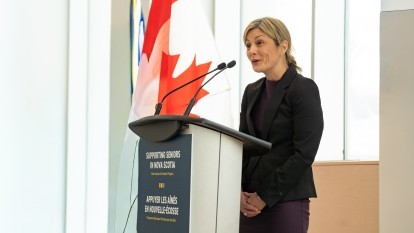
Dr. MacGillivray, who emceed the event, spoke on how this significant investment will help build community capacity and positively impact the lives of people aged 55 and over in northeastern Nova Scotia. Dr. Aubrecht thanked partners and the many people and organizations involved with this project and noted how excited they are to continue to learn with and from community organizations and to help improve community for all.
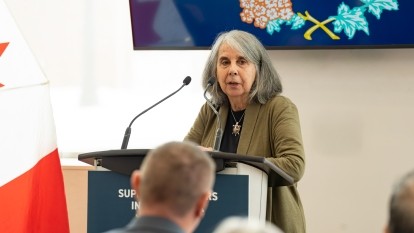
“When seniors are active in the community, everybody benefits,” Dr. Bigelow agreed in her remarks.
Elaine MacLean, a participant in community organizations, noted how critical it is to remove barriers, which can range from financial to accessibility, so that everyone can participate. She says she is looking forward to all those in her age group having this opportunity.