

For hundreds of years, law enforcement investigative interviewing training has been based on two assumptions:
1. Lies, tricks, threats and sometimes even assaults are often necessary and justified to get someone to admit to committing a serious crime.
2. These tactics would not cause someone to falsely confess to a crime they did not commit.
Of course, it has now long been recognized and proven that hundreds of people have falsely confessed to crimes they are innocent of. However, the debate over whether questionable interviewing tactics led to these false confessions continues.
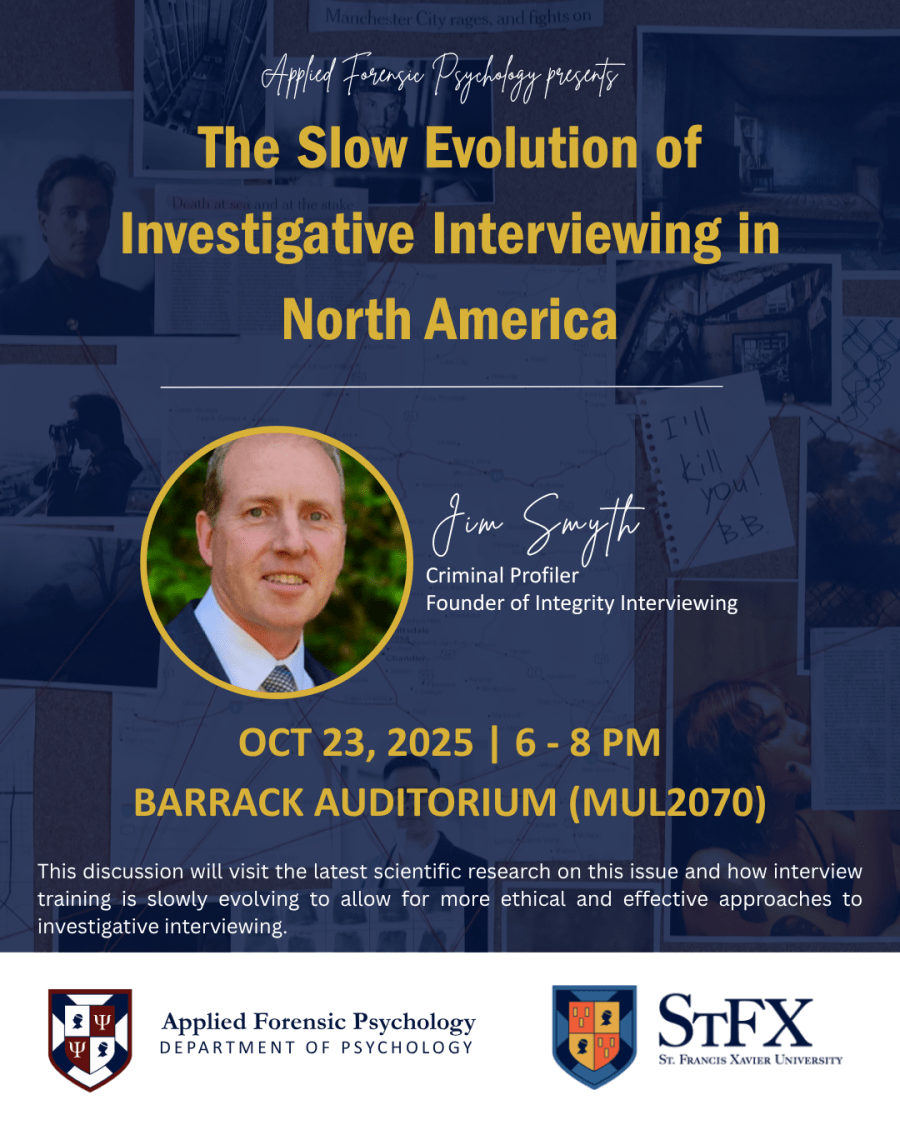
This discussion will visit the latest scientific research on this issue and how interview training is slowly evolving to allow for more ethical and effective approaches to investigative interviewing.
About Jim Smyth:
Jim served as a member of York Regional Police and the Ontario Provincial Police for 35 years. His career involved working as a violent crime investigator before completing the International Criminal Investigative Analysis Fellowship Understudy Program, resulting in certification as a criminal profiler. He also completed the Canadian Police College Polygraph Examiner’s course resulting in his certification as a forensic polygraph examiner and forensic interviewer. He is the only Canadian police officer certified in both disciplines.
Jim was later promoted to the role of Major Case Manager, overseeing homicide, serial and organized crime investigations.
In 2017, Jim was promoted to Superintendent and assigned as Director of Operations for the OPP’s Central Region, overseeing approximately one thousand uniform, crime investigators and emergency response team personnel.
Jim is the recipient of six OPP Accolade Awards, the Queen Elizabeth II Diamond Jubilee Medal and is a Member of the Order of Merit of the Police Forces.
Currently, Jim is the founder and lead instructor for Integrity Interviewing, a company dedicated to teaching investigators the most reliable and scientifically sound principles for obtaining voluntary and credible statements.