

Guest speakers
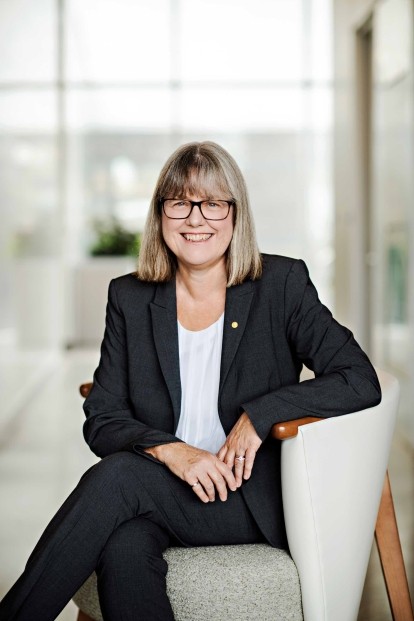
Donna Strickland is a professor in the Department of Physics and Astronomy at the University of Waterloo and is one of the recipients of the Nobel Prize in Physics 2018 for developing chirped pulse amplification with Gérard Mourou, her PhD supervisor at the time. They published this Nobel-winning research in 1985 when Strickland was a PhD student at the University of Rochester in New York state. Together they paved the way toward the most intense laser pulses ever created. The research has several applications today in industry and medicine — including the cutting of a patient’s cornea in laser eye surgery, and the machining of small glass parts for use in cell phones.
Strickland was a research associate at the National Research Council Canada, a physicist at Lawrence Livermore National Laboratory and a member of technical staff at Princeton University. In 1997, she joined the University of Waterloo, where her ultrafast laser group develops high-intensity laser systems for nonlinear optics investigations. She is a recipient of a Sloan Research Fellowship, a Premier’s Research Excellence Award and a Cottrell Scholar Award. She received the Rochester Distinguished Scholar Award and the Eastman Medal from the University of Rochester. Strickland served as the president of the Optical Society (OSA) in 2013 and is a fellow of OSA, the Royal Society of Canada, and SPIE (International Society for Optics and Photonics). She is an honorary fellow of the Canadian Academy of Engineering as well as the Institute of Physics. She received the Golden Plate Award from the Academy of Achievement, is in the International Women’s Forum Hall of Fame, and holds numerous honorary doctorates.
Strickland earned a PhD in optics from the University of Rochester and a B.Eng. from McMaster University.

Dr. K. Renee Horton is a native of Baton Rouge, Louisiana and is a graduate of Louisiana State University and with a Ph.D. in Material Science with a concentration in Physics from the University of Alabama, as the first African American to receive this degree. In her day job, she serves as a NASA Space Launch System (SLS) Quality Engineer at Michoud Assembly Facility (MAF) in New Orleans. Throughout her academic career, Renee has received numerous accolades and awards including the Black Engineer of the Year Trailblazer Award in 2011. She was named a 2019 Louisianian of the year and is honored in a group of nine individuals who stand out in their professions, give back and represent what’s best about Louisiana. She is an advocate for diversity and inclusion in Science, Technology, Engineering and Mathematics (STEM), and works diligently in the community for STEM education and STEM outreach. Renee believes in changing the face of STEM. She is the founder of Unapologetically Being, Inc., a nonprofit for advocacy and mentoring in STEM. Renee is a compelling and international inspirational speaker who brings her epic personal story, expertise, and incredible personality to each of her award-winning presentations. Renee has spoken all over the world including South Africa, Brazil, South Korea, Canada, Jamaica and Mexico. She has served as an invited speaker for the first International Women and Girls Day at the United Nations, Dow Chemical Black History Speaker, the National Air and Space Museum, Essence Power Stage, LSU Engineering commencement, numerous youth groups, just to name a few.
In 2016, Renee was elected President of the National Society of Black Physicists (NSBP) as the second woman to hold the office. She has served the physics community abroad as a member of the International Union of Pure and Applied Physics (IUPAP) Women in Physics Working Group and currently serves on several advisory boards dedicated to a more diverse inclusion in physics. In 2017, she was elevated to a Fellow in the NSBP, which is the highest honor bestowed upon a member and in 2018 was inducted into Sigma Pi Sigma, the prestige honor society in physics. She is the author of Dr. H Explores the Universe, a children’s series, Dr. H and her Friends, and Dr. H Explores the ABCs. Renee recently was named the Silver Anniversary Artie Literature Award winner for 2018, from New Orleans Alumnae Chapter of Delta Sigma Theta Sorority Inc, her published works. She is a proud member Delta Sigma Theta Sorority, Inc., as well as the proud mother of three and grandmother of two.

Allan H. MacDonald was born in Antigonish, Nova Scotia, Canada, where he spent his early years. He was educated in Canada, earning his B.Sc. degree from St. Francis Xavier University in Antigonish in 1973. He earned his M.Sc. and Ph.D. degrees in physics from the University of Toronto in 1974 and 1978. He spent several years as a member of the research staff of the National Research Council of Canada before becoming a faculty member at Indiana University in the U.S., where he spent over a decade. In 2000 he joined the faculty of the University of Texas at Austin, where he holds the Sid W. Richardson Chair in Physics. Professor MacDonald’s contributions to the theory of condensed matter physics have spanned many topics, including electronic structure theory, the quantum Hall effect, magnetism, and superconductivity. He is a member of the American Academy of Arts and Sciences and the U.S. National Academy of Sciences and was awarded the Herzberg Medal (1987), the Buckley Prize in Condensed Matter Physics (2007), and the Ernst Mach Honorary Medal (2012). In 2011 he predicted that a small rotation to a ”magic“ relative orientation angle would covert graphene bilayers from weakly interacting Fermi liquids to tunable strongly correlated electronic states. A rapidly expanding field (twistronics) with an impressive range of potential applications has grown from this observation.
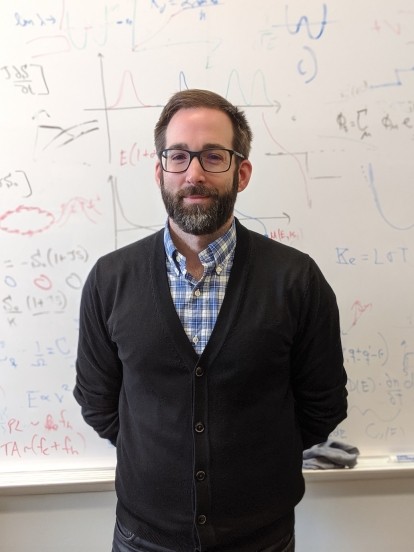
Jesse Maassen received B.Eng. and M.A.Sc. degrees in Engineering Physics from the École Polytechnique de Montréal in 2006. He obtained a Ph.D. in Physics from McGill University in 2011 working on first-principles simulations of nanoelectronic devices. During 2012-2015, Dr. Maassen was a postdoctoral fellow in the Electrical Engineering department at Purdue University. Since 2016 he has been an Assistant Professor of Physics at Dalhousie University. His research interests focus on exploring novel materials and devices, using predictive first-principles modeling, with an emphasis on electro-thermal transport.
Contact
2052 Nasso Family Science Centre
5009 Chapel Square
Antigonish NS B2G 2W5
Canada